Better Visibility
Real-time understanding of financial and operational performance.
Solutions
Help transform fragmented operations toward a scalable business operating system.
We help companies move from limited visibility, manual processes and operational bottlenecks to structured operations, stronger cash flow and scalable growth.
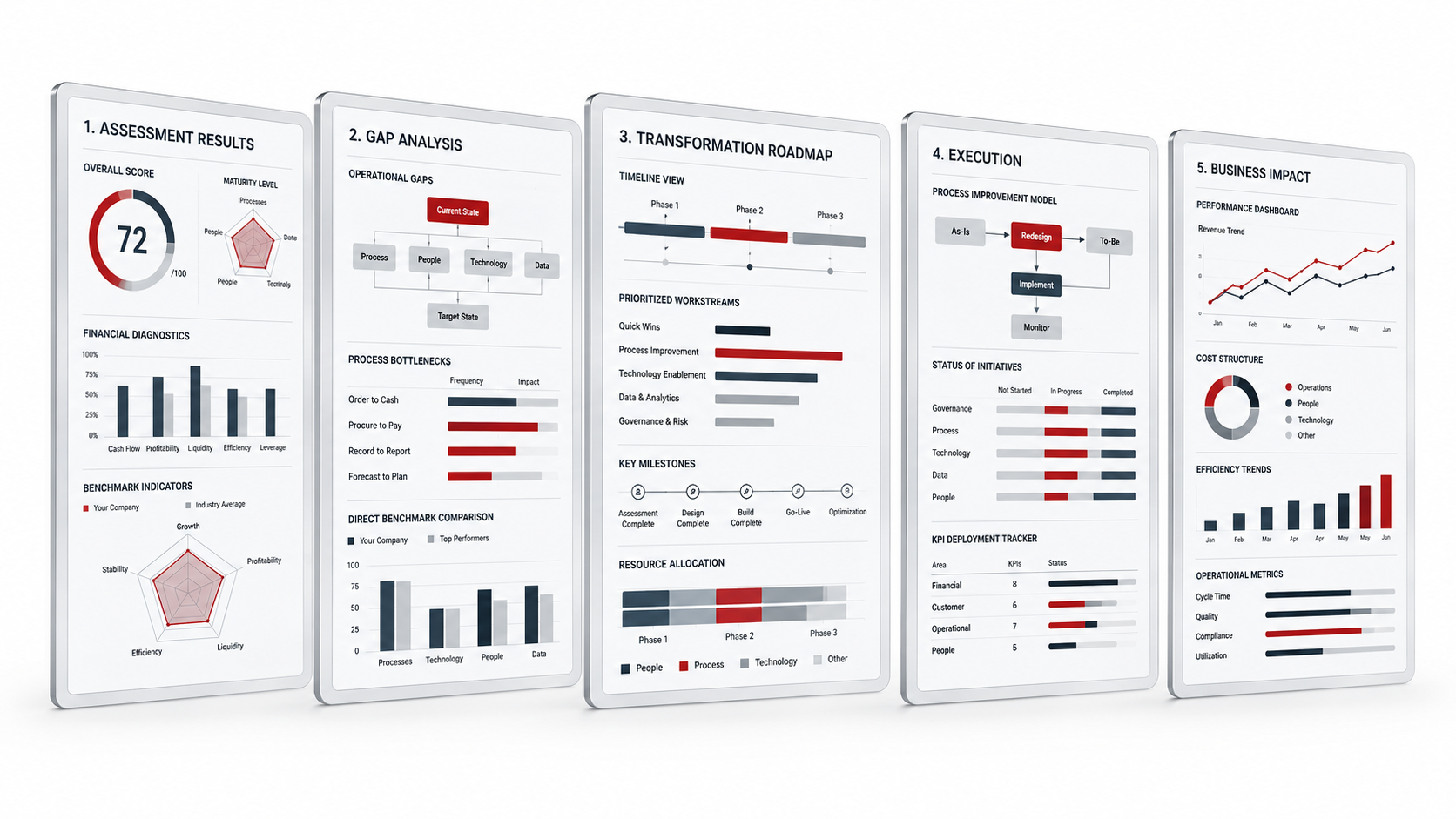
01 · Discover & Assess
Every transformation begins with an honest view of how the business actually operates, not how it is described in slide decks.
Most performance problems are symptoms of deeper structural issues: fragmented data, unclear accountability, weak controls and processes that evolved without design. Without a rigorous assessment, transformation investment is guesswork.
We conduct a structured review of systems, processes, reporting structures, controls, workflows and data quality. We map how information moves through the organisation, where decisions stall, and where operational friction creates cost and risk.
Leadership gains clarity on root causes, not symptoms, and a prioritised view of what must change before any solution is built.
Connects to

What you receive
02 · Design & Strategize
Transformation fails when teams implement tools before agreeing what the business needs to look like.
Without a clear target operating model, projects compete for attention, budgets fragment and outcomes remain undefined. Strategy must precede execution, otherwise every improvement is local, not structural.
We define the future-state operating model, align stakeholders on priorities, and build a practical transformation roadmap linked directly to business outcomes. Resource requirements, governance and sequencing are agreed before build begins.
A prioritised transformation plan with clear accountability, realistic phasing and measurable targets, approved by the people who must deliver it.
Connects to

What you receive
03 · Build & Integrate
Systems alone do not create transformation. Value comes from connecting processes, data, people and technology into one operating model.
Disconnected systems create duplicate work, inconsistent data and reporting that nobody trusts. Integration is not an IT task, it is the structural work that makes the business function as one entity.
We redesign core processes, integrate systems, establish data architecture and align financial structures with operational reality. Teams, tools and workflows are connected so information flows once, accurately, through the organisation.
An integrated operating foundation where processes, data and systems work together, creating the platform for automation and reliable reporting.
Connects to

What you receive
04 · Automate & Optimize
Once the foundation exists, manual effort can be systematically removed and operations orchestrated with consistency.
Manual processes consume capacity, introduce errors and delay decisions. Automation is not about replacing people, it is about freeing them from low-value work so the organisation can operate at higher throughput without proportional headcount growth.
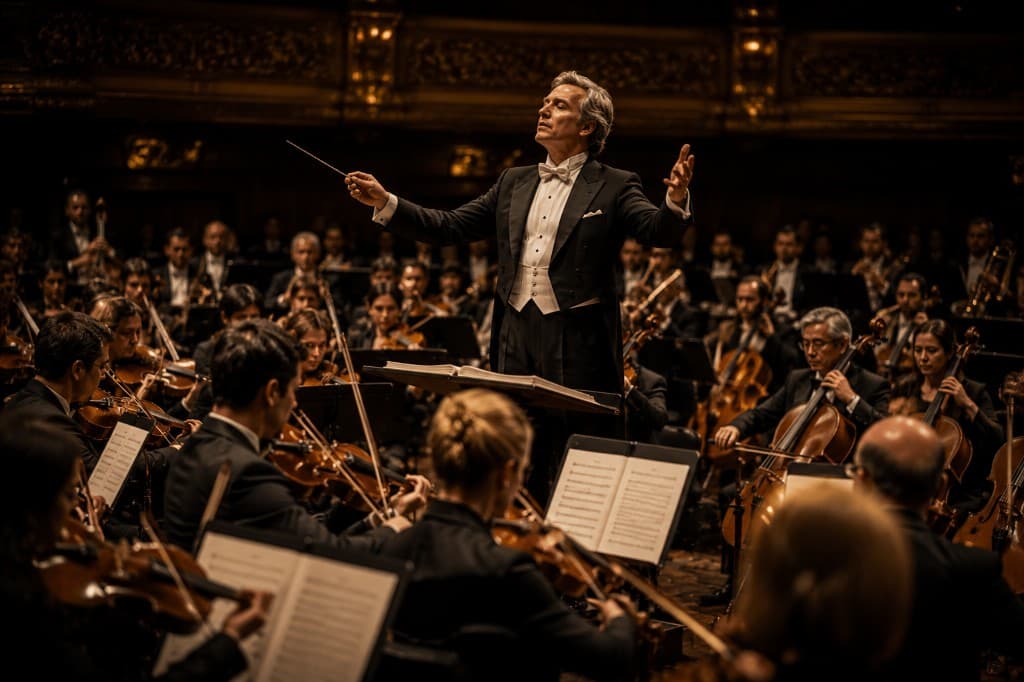
We automate workflows, approvals and reporting. Processes are standardised, controls embedded and handoffs orchestrated so work moves through the business predictably, like a conductor coordinating every section of an orchestra.
Reduced manual effort, stronger controls and consistent execution, with teams focused on analysis, judgement and value creation rather than data collection.
Connects to
What you receive
05 · Measure & Control
Transformation only creates value when performance becomes visible to the people responsible for it.
Without reliable KPIs and management reporting, leadership operates on instinct. Cash flow surprises, margin erosion and operational drift go undetected until they become crises. Measurement is the control mechanism that sustains improvement.
We establish KPI frameworks, management reporting structures and performance review rhythms. Dashboards and reports are designed for decision-making, not decoration, with clear ownership and escalation paths.
Real-time visibility into financial and operational performance, enabling faster, more confident decisions at every level of the business.
Connects to

What you receive
06 · Grow & Sustain
The objective is not implementation. The objective is a business capable of sustainable growth.
Many organisations improve locally but cannot scale without losing visibility, governance or operational discipline. Growth without structure creates complexity that erodes margins and overwhelms management capacity.
We embed continuous improvement, long-term governance and a scalable operating model. The business is prepared for expansion, new markets, locations or product lines, without rebuilding its foundations each time.
A resilient organisation that scales with confidence, maintaining visibility, cash flow discipline and operational efficiency as it grows.
Connects to

What you receive
The Transformation Result
From
To
Better Visibility
Real-time understanding of financial and operational performance.
Stronger Cash Flow
Better control over working capital, margins and cash generation.
Automated Operations
Less manual work. More time spent on high-value activities.
Conclusion
Transformation is not about implementing systems.
It is about creating visibility.
Visibility leads to better decisions.
Better decisions improve cash flow.
Stronger cash flow creates options.
Options create growth.